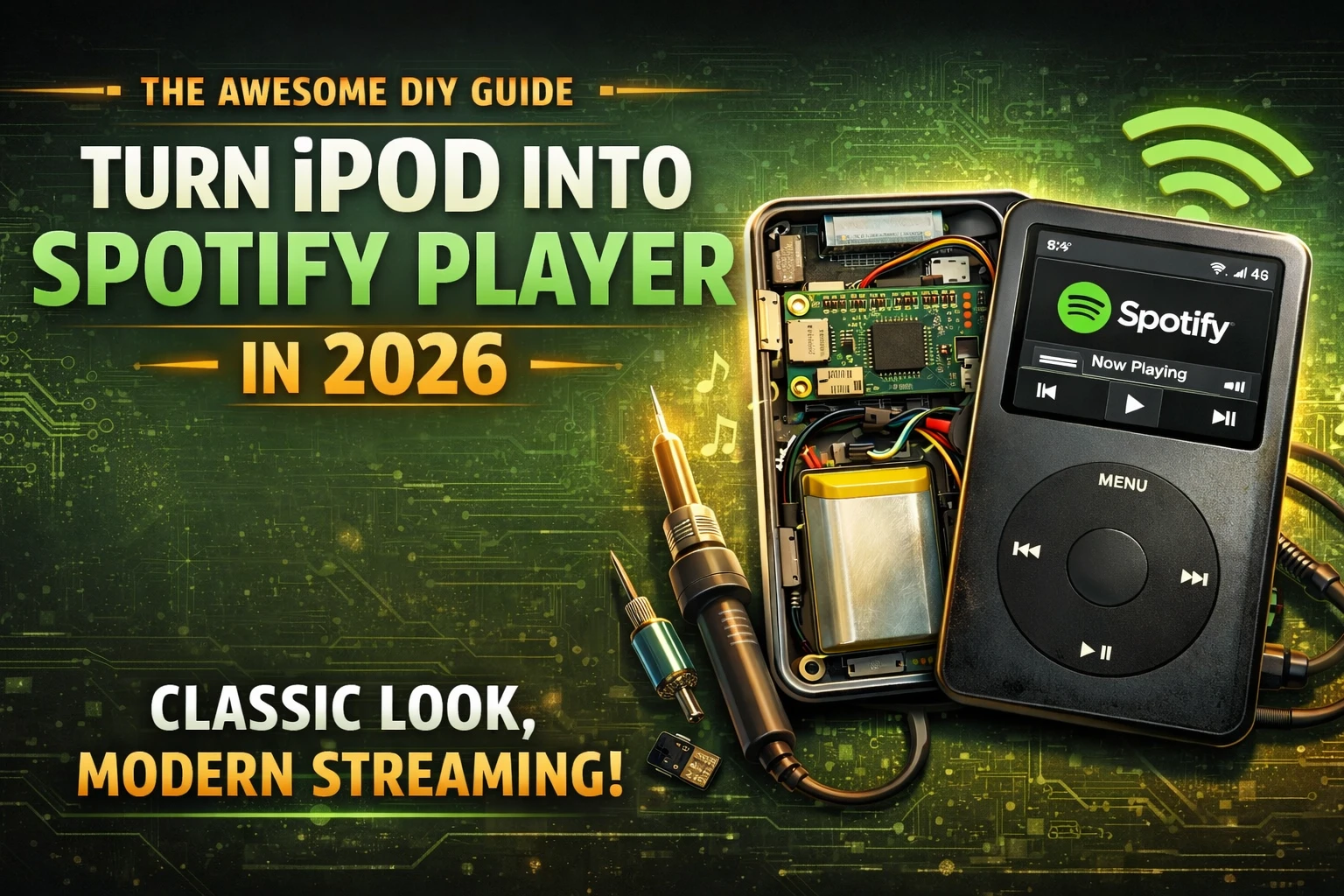
1. Introduction: Giving Classic Nostalgia Modern Sound
Do you remember the satisfying “click” of the iPod Classic’s wheel? It’s a design masterpiece, but its limited storage and lack of Wi-Fi make it obsolete in the streaming age.
Good news! This beloved device doesn’t have to stay obsolete. The goal is simple — turn your classic iPod into a Spotify player.
As promised in our main DIY Old Gadgets Upgrade 2025 guide, this detailed cluster post will walk you through the process of replacing the iPod’s outdated guts with modern components. You’re about to successfully turn iPod into Spotify player, creating a one-of-a-kind device that streams millions of songs while maintaining that classic, tactile feel.
This is a moderately challenging project, but the result is worth every solder joint. Let’s upcycle old gadgets and create something truly unique!
2. Hardware and Parts Checklist (The Shopping List)
To successfully execute this upgrade and turn iPod into Spotify player, we’re essentially building a mini-computer inside the iPod shell.
Essential Components
| Component | Why You Need It (2026 Context) |
|---|---|
| Microcontroller | Raspberry Pi Zero 2 W – Best balance of size, performance, and built-in Wi-Fi/Bluetooth. Handles Spotify Connect smoothly in 2026. |
| Interface | iPod Clickwheel Breakout Board – Converts ribbon signals into usable GPIO input. |
| Power Protection (CRITICAL) | USB-C LiPo Charger + Protection Module – Better thermal protection and stable current output. |
| Battery | 1200mAh–2000mAh Li-Po Battery – Higher energy density cells deliver 6–8 hours of streaming. |
| Audio | PCM5102 DAC or USB DAC – Much cleaner sound than Pi’s PWM audio. |
| Storage | 32GB or 64GB MicroSD Card – Raspberry Pi OS 2026 builds require slightly more space. |
Successfully bringing these components together in the small shell is the first major step to turn iPod into Spotify player.
Optional 2026 Upgrades
- USB-C port conversion for modern charging
- Small OLED secondary display mod
- Slim heat spreader for Pi Zero 2 W
- Internal Bluetooth antenna optimization
Tools Required
- Fine-tip soldering iron
- Thin solder (lead-free recommended)
- 30 AWG flexible wire
- Multimeter
- Precision screwdriver kit
- Plastic spudgers
- Heat shrink tubing
3. Step-by-Step Tutorial: The Hardware Hack
The next step in your mission to turn iPod into Spotify player is assembling and wiring the components carefully inside that tight iPod shell.
Step 1: Safe Disassembly and Cleanup
Open the Shell
Use thin plastic tools to carefully separate the front and back casing. Avoid metal prying tools if possible — they leave marks.
Remove Old Battery First
Disconnect and safely dispose of the original Li-Ion battery at an e-waste center.
Strip It Down
Remove:
- Hard drive
- Original motherboard
- Old connectors
Keep:
- Clickwheel assembly
- Screen (if planning display integration)
- Outer shell
Now you’ve got an empty nostalgia shell ready for modern guts.
Step 2: Component Mounting and Power Wiring
Mount the Pi
Secure the Raspberry Pi Zero 2 W using:
- 3D-printed bracket
- High-quality double-sided foam tape
Battery Wiring
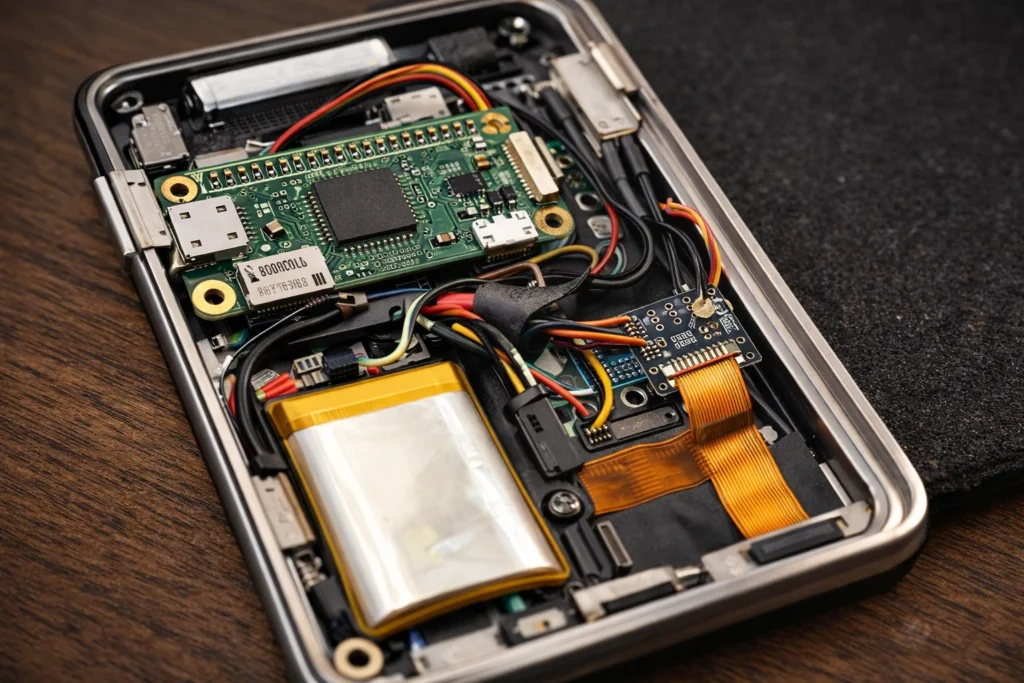
- Connect LiPo battery → charger/protection board.
- Connect charger output → Pi 5V and GND GPIO.
- If converting to USB-C, wire the port to the charging module.
⚠ In 2026, overheating and battery swelling are the biggest risks in tight retro builds. Always:
- Leave slight airflow space
- Avoid cheap no-name batteries
- Test charging cycles outside the case first
Step 3: Click Wheel and Audio Integration
Clickwheel Setup
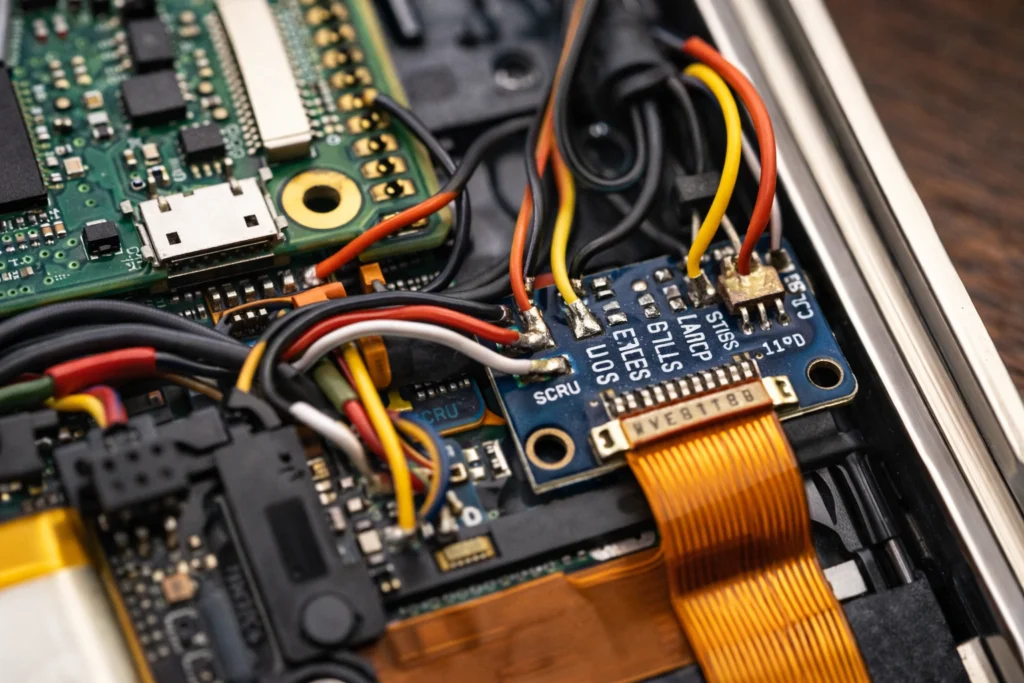
- Ribbon cable → breakout board
- Breakout board GPIO → Pi GPIO pins
- Map pins for:
- Scroll
- Menu
- Select
- Left/Right
Audio Setup
For best results in 2026:
- Use PCM5102 via I2S for clean digital audio
OR - Use high-quality USB DAC adapter
USB DACs are easier. I2S DACs look cleaner and save space.
4. Software Setup to Turn iPod into Spotify Player (2026 Version)
Once the hardware is set, it’s time to turn iPod into Spotify player through software — this is where the Raspberry Pi setup and Librespot magic happen.
Step 4: Operating System and Drivers
Install:
Raspberry Pi OS Lite (2026 minimal build)
Why Lite?
- No desktop
- Lower RAM usage
- Faster boot
- Ideal for dedicated streaming device
Headless Setup
Before first boot:
- Enable SSH
- Add Wi-Fi credentials
- Expand filesystem
Step 5: Spotify Client Installation (Librespot Setup)
Librespot is still the best way to turn iPod into Spotify player.
What it does:
Makes your device appear inside Spotify as a Connect speaker.
Music streams directly from Spotify servers to your iPod.
Install via:
Precompiled ARM binary
OR
Docker container (popular in 2026 builds)
Configure:
Auto-start on boot
Set audio backend (ALSA)
Assign custom device name like:
“Retro Spotify Pod 2026”
👉 Reference: Visit the official Librespot GitHub and Raspberry Pi OS Lite documentation for details.
Step 6: Command Mapping and Calibration
Create a lightweight Python script:
- Center Click → Play/Pause
- Scroll → Volume control
- Left → Previous
- Right → Next
Test all buttons using SSH before closing the case. When everything works — congratulations, you’ve officially turned iPod into Spotify player!
5. Final Assembly and Troubleshooting
Final Housing
Secure wires neatly with heat shrink or electrical tape. Gently close the iPod shell, ensuring no components are crushed and the screen aligns properly.
Common Problems and Solutions
| Problem | Potential Cause & Solution (2026 Updated) |
|---|---|
| Click Wheel Unresponsive | GPIO pin mapping error or missing driver. Recheck ribbon cable connection, confirm correct GPIO configuration, and test your Python input script via SSH before sealing the case. |
| No Audio Output |
DAC not detected or incorrect ALSA routing. Run aplay -l via SSH
to confirm device detection. Verify audio output is properly set in Librespot configuration. |
| Wi-Fi Drops Frequently | Pi Zero internal antenna is weak inside metal iPod shell. Stay closer to router, reposition internal layout, or use a compact external Wi-Fi dongle via USB hub. |
6. Conclusion and Your Next Upgrade
Congratulations! You’ve mastered the art of how to turn iPod into Spotify player — reviving a timeless gadget into a modern streaming device.
You didn’t just build a music player; you built a statement against e-waste and proof that classic tech still has value.
This is the ultimate upcycling project for music lovers who miss that iconic clickwheel feel.
Ready for the next challenge? Now that you’ve explored Raspberry Pi and GPIO control, check out our next DIY project — turning an old console shell into a retro gaming emulator!
👉 Return to Main Guide: DIY Old Gadgets Upgrade 2025: How to Make Classic Devices Smart
🔗 Explore the Full Series
This project is part of the DIY Old Gadgets Upgrade 2025 series — where we transform vintage tech into powerful modern tools. Read the full guide here →
FAQs for “Turn iPod into Spotify Player”
Q1. Can you really turn iPod into Spotify player?
Ans. Yes! By replacing the old hardware with a Raspberry Pi Zero 2 W and installing Librespot, you can stream directly from Spotify over Wi-Fi.
Q2. Do I need coding skills to turn iPod into Spotify player?
Ans. Not much — just follow the wiring and simple setup commands mentioned here to turn iPod into Spotify player.
Q3. Is it safe to open an old iPod Classic?
Ans. Yes, but handle the battery carefully. Dispose of it safely at an e-waste center.
Q4. How much does it cost to turn iPod into Spotify player?
Ans. Around $40–$70, depending on whether you already own parts like the Pi, DAC board, or battery.
Q5. Can I still use the iPod click wheel?
Ans. Absolutely. With the right breakout board and GPIO mapping, the classic clickwheel works like new.
Q6. What software is needed?
Raspberry Pi OS Lite and Librespot (Spotify client) — they make your iPod act like a Spotify Connect device.